
Nov 12 -13, Saratoga Springs, NY
 Videos and slides from the conference have been uploaded. Check the agenda/session detail page. If you like what you see and you're not yet a member of the NYS GIS Association, please JOIN. It's only $10.

 The NYS Tug Hill Commission works with rural communities that do not always have the financial means to dive into geospatial technologies. We ourselves have also learned how to continue to operate on a tight budget over the years.
I will walk you through some of the different technologies we have used, as well as, how communities within our region have utilized some of these technologies. Our communities and us have used many different types of technologies ranging from ESRI, GIS Cloud, Quantum GIS, MapWindows GIS, Google Earth, Google Maps, Bing Maps, Trimble SketchUp, Fusion Tables, etc. They have been used for applications in natural resources, zoning, tourism, asset management, and others.
I will show you some of the examples of how these technologies were used and how they might apply to others. You will be able to see what features some of these technologies had that made them the best choice for the application they were chosen for. This will give you a quick overview of just some of the technologies out there that could be utilized on a budget.
Russell Brownell is a Tax Map Technician at the Office of Real Property at Lewis County NY. He received his Bachelor’s from SUNY Oswego in Computer Graphics and spent 13 years land surveying the north country. Russ can be contacted at rbrownell@lewiscountyny.org.
 Lewis County has recently started utilizing GIS Cloud for their online GIS needs. We are looking at utilizing it in different departments, but right now it is primarily being run out of the Real Property office. One of the applications we are using it for is to share data with other agencies we work with. One of these agencies is the NYS Tug Hill Commission. We are utilizing capabilities within GIS Cloud, which allows us to share specific datasets with them so that they can create their own GIS Cloud maps with our datasets. Also, we are working on ways to share data that can be downloaded by them through the same platform. This way they can have access to the most current data when they need it and they can also share data for our county back to us. We have also been looking at making some of our data available through WMS, which can be done through the GIS Cloud platform.
We are also looking at working with our Recreational Trails Coordinator in utilizing the free Mobile Data Collection app for GIS Cloud, to help collect trail information and having the data show real-time updates in our GIS Cloud map. We may look at utilizing the free mobile app in a way that would allow the public to have access to trail information, as well as, being able to potentially provide feedback for those trails.
As a smaller populated county, we think we could provide some useful insight to others on the potential of cloud applications and show how we have been using it to benefit us.
Sam Wear has been GIS Manager for Westchester County GIS for over 25 years. In this capacity he has been responsible for all elements of data and application development in support of both county and local government GIS applications. He is a former two-time President of the Northeast Arc User Group and founder of the NYS GIS Association. His tenure with Westchester County also includes a four-year IPA detail with the U.S. Geological Survey at USGS headquarters in Reston, VA.
Sam received his B.S from the Univ of Idaho and M.S. in Natural Resources Planning from the Univ of Vermont.
 In its 25th year of operation, Westchester County GIS continues to be a model program in providing geospatial products and services to local governments. Leveraging the County’s established GIS hardware and software infrastructure, local governments can easily download datasets, consume and mash-up live map services in a variety of viewers, and now enable mobile devices for field data collection efforts. Collectively, the availability of these services from the County is increasingly being referred to as the county “GIS Cloud”.
Individually or combined, these Westchester County GIS products and services enable local governments, typically with limited resources, to build or extend GIS capacity in the organization with limited or no investment. This presentation will provide an overview of the County’s products and services which may serve as example of similar sized county or regional GIS programs
Frank Donnelly is the Geospatial Data Librarian and an Assistant Professor at the William and Anita Newman Library at Baruch College, CUNY. He is a subject specialist in geography and GIS and has extensive experience working with US Census data. Prior to becoming a librarian he worked as a planner for the Archdiocese of Philadelphia and the NJ Pinelands Commission. He holds an MLIS from the University of Washington and an MA in Geography from the University of Toronto.
 The NYC Geodatabase was created at Baruch College CUNY to introduce novices to spatial databases and to provide all NYC mappers with a foundational open source resource for basic analysis and mapping. Built as an extension of the ubiquitous SQLite database, Spatialite is an easily configurable file-based spatial database that uses open standards and comes with its own command line and GUI program; it also integrates with the popular QGIS desktop software. This talk will demonstrate the primary features of Spatialite, specifically how data is organized and stored and how spatial SQL can be used for queries, analysis, and geoprocessing. We will also explore the specific contents of the database, which contains geographic features and census data compiled from several public sources. All of the features were transformed to share a common coordinate reference system that is appropriate for the area and generalized to be appropriate for city-level data mapping. Boundaries were built off of the 2010 Census TIGER files, making the database extensible beyond the five boroughs. Open source mappers will discover that Spatialite is a nice addition to their FOSS GIS stack for small to medium-sized projects: it is less complex then setting up a server-based geodatabase while offering similar capabilities, and is more efficient than using shapefiles. Its portability, easy configuration, and range of features also make it an ideal teaching tool.
Jim Hall, GISP is a Senior Analyst and Project Manager with Bowne Management Systems. He specializes in architecting and overseeing implementation of GIS and IT solutions, and is the practice leader for Bowne’s Business Continuity/Disaster Recovery practice. In his 20+ year career, Jim has completed projects for over 50 different government, utility and corporate customers including, most notably, the NYC Economic Development Corporation, the NYC Department of Environmental Protection, the NYC Department of Information Technology and Telecommunications, the NYS State Historic Preservation Office as well as Westchester, Orange, Ulster and Cortland Counties. He holds a B.A. in Geography from Virginia Tech, and has made over 50 presentations at industry events and conferences in five countries.
Sam Wear has been GIS Manager for Westchester County GIS for over 25 years. In this capacity he has been responsible for all elements of data and application development in support of both county and local government GIS applications. He is a former two-time President of the Northeast Arc User Group and founder of the NYS GIS Association. His tenure with Westchester County also includes a four-year IPA detail with the U.S. Geological Survey at USGS headquarters in Reston, VA.
Sam received his B.S from the Univ of Idaho and M.S. in Natural Resources Planning from the Univ of Vermont.
 In 2012 the Westchester County Department of Information Technology (DoIT) and Bowne Management Systems, Inc. worked with the Department of Emergency Services to update and improve the street centerline data used by the County’s Fire and Emergency Medical Dispatch System.
The Project involved:
This presentation will describe:
Eric A. Herman, GISP, has been the GIS Program Manager at the NY State Thruway Authority for the past 13 years. Prior to that, he was involved in GIS and mapping at the NY State Department of Transportation for over 10 years. Eric currently serves on the state’s Geospatial Advisory Council, the NYS GIO’s GIS Team, the NYGeoCon committee, and is the chairman of the NYS GIS State Advisory Group. He holds both a Bachelors and a Masters degree in Geography.
 In response to earthquake activity in the northeast over the past few years, recent requirements have been developed to allow for dealing with the impacts of these events more effectively. To manage these concerns, the New York State Thruway Authority/Canal Corporation has developed a new earthquake notification tool. This tool receives live feeds of seismic activity from the USGS, and processes the data by analyzing it against specific elements of the organization’s infrastructure. The application identifies features that have the potential to be damaged, then highlights them on an internet-accessible map. It alerts appropriate staff that an incident has occurred, and identifies the structures that require inspection. This is all done using a combination of Python scripts which process the data in ArcGIS, and a Google Maps user interface. This presentation will provide background about the need for the application, review the numerous processes that get run, explain the rationale for various decisions that were made along the way, and include a demonstration of the final application.
 The 408 Group located in Brooklyn, NY has been working on a joint project with RPI located in Renselear, NY. This research project (known as MUNICIPAL) is a decision-support tool developed for the U.S. Department of Homeland Security (DHS) Coastal Hazards Center to aid in the restoration of critical infrastructure systems following storm events. MUNICIPAL predicts damage to infrastructure components given a specific disaster scenario, produces an optimal restoration plan for estimated damage, and contains a Geographic Information Systems (GIS) interface to visualize the results. The GIS component makes use of an open source stack including GEOServer, PostGIS, OpenLayers and JQuery. The GIS solution has been extensively customized around the large data set of the project.
MUNICIPAL was developed and tested in close cooperation with the New Hanover County, North Carolina Department of Emergency Management who will host a practitioner workshop to expand the applicability of the technology for training and preparedness purposes. MUNICIPAL will be integrated with DHS’s Standard Unified Modeling, Mapping & Integration Toolkit (SUMMIT). Making this decision support tool SUMMIT-compliant will enable emergency managers to use the planning and training capabilities of SUMMIT in concert with the modeling and simulation capabilities of MUNICIPAL.
Alyssa Mathews is a graduate student studying Environmental Science at Rochester Institute of Technology. She is also a recent graduate of Stony Brook University, with a B.S. in Atmospheric and Oceanic Science. She is originally from New England and is very interested in the relationship between disaster management and response and GIS.
 ‘Serious games’ are non-entertaining games with real world uses. Serious games can have numerous applications such as developing spatial thinking skills and situational awareness in a GIS analyst or testing the communication skills of multiple analysts. We have created a serious gaming environment to teach and measure spatial thinking skills in an emergency training problem solving scenario in ArcGIS. Using an emergency response scenario in which toxic substances washed up on the shore of the local park from riverine flooding, our game presents the user with a series of problems to solve using spatial thinking. Examples of these problems could be determining which areas are affected, and to what degree; or which GIS tools can be utilized in the scenario. Our game uses a real world interface and consists of multiple choice questions with points in the game awarded based on the choices selected. Designing this training environment as a virtual scenario allows for flexibility in the situation, difficulty level, and responses the user can input.
Mr. Longanecker is a geospatial web developer for NBT Solutions with over 5 years of experience in software design, development, and testing. John leads NBT Solutions’ open source development team and uses a variety of open source geospatial tools for project development. His recent projects include the WeatherBlur science learning project, the Detroit Energy weatherization assistance mapping portal, and the population vulnerability index mapping site for the Center of Disease Control.
 The Island Institute of Maine has several missions including promoting a better understanding of the natural environment of coastal Maine and the impact of climate and climate change on Island and Coastal communities.
To help meet this mission, the Island Institute engaged NBT Solutions to develop an online collaboration platform that allows people who study, live, and work in the coastal environment in both Maine and Alaska to provide their unique input in support of better understanding the coast. Geared toward participating Island Schools, Marine and Climate Science professionals, and Fishermen, the platform supports local narratives on weather patterns and climate context for students. The online collaborative platform consists of three (3) parts:
The key themes of this presentation are: mobile web applications and responsive design; open source geospatial tools; and social collaboration frameworks.
Matthew is a Geospatial Technologist at Erdman Anthony Associates. He is a 2010 graduate of Alfred State College with a bachelor’s degree in Surveying Engineering Technology, and is currently enrolled in the online Postbaccalaureate Certificate program at Penn State University.
Jeff Langella is a Information Technology Specialist 2 for the NYS Office of Information Technology Services – GIS Program Office. Jeff received his Bachelor Degree in Geography with a concentration in GIS from the University at Buffalo. Jeff has been working on the New York State Digital Orthophoto Program (NYSDOP) since 2003 and has been recently working on the GIS Program Offices Elevation data program.
 This presentation will highlight a recent project to develop three dimensional (3D) GIS models of buildings and other structures in several areas. The project focused on using existing datasets (LIDAR, aerial stereo imagery) to create detailed digital elevation models and 3D models for a suburban office complex and an urban downtown area. Part of the project scope was to review different options for creating and storing the model datasets. This presentation will discuss those options, how the existing datasets were used to facilitate model building, and some of the issues addressed as the 3D models were created. The ultimate goal is to support efficient 3D visualization of these areas while also allowing detailed line of sight and view shed analysis and other 3D analysis. These uses will also be discussed. The existing datasets used in this project are available for many other areas in New York state.
With forty years of Geographical Information Systems experience Bill has been involved in most all aspects of GIS development and analysis. His responsibilities include needs analysis, project management and business partner development.
 An overview of UAVs and their restrictions for use by the FAA will be discussed. The use of UAVs and digital cameras, coupled with advances in computing power allow a high level of automation in feature extraction and pixel matching. These advancements have resulted in exciting new developments in the application of photogrammetric data capture and viewing. Imagery from digital cameras can generate highly detailed 3D data sets as well as providing imagery for high density LiDAR data. As this technology continues to evolve, an increasing number of applications will be developed, ranging from survey accuracy feature extraction to general 3D visualization. Examples of APM and for event planning and response will be presented.
James Mower is an Associate Professor in the Department of Geography and Planning at the University at Albany. He currently directs the undergraduate and graduate Geographic Information Systems and Spatial Analysis Certificate programs and also directs the GIS Internship program. His current research interests include non-photorealistic landscape rendering, augmented reality within GIS applications, and parallel algorithm development for cartography and GIS.
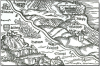 Pen and ink landscape representations in the style of Holmes, Davis, Lobeck, Raisz, and others are noted for their ability to communicate landscape forms and processes with minimalistic elegance. This presentation will provide an overview of methodologies for constructing pen and ink style landscape
illustrations using smooth surface models on modern graphics hardware. Following a brief discussion of manual methods, the author will introduce polynomial models for surface rendering and their implementation in both fixed pipeline OpenGL as well as in the new shader environments. The presentation will also discuss the generation of silhouettes and form lines for topographic surfaces in the context of both fixed pipeline and shader implementations.
 Technical and Business Innovations for Geospatial 2014;
  Dense Terrain Extraction from Stereo Imagery Using Semi-Global Matching.
Frank Obusek is an Applications Engineer supporting Intergraph’s US Geospatial Sales Team. He has a Master’s Degree in Geology from Bowling Green State University and has worked with geospatial technologies for nearly 20 years. Frank’s expertise includes remote sensing photogrammetry, and feature extraction.
Bill has an undergraduate degree in Urban Planning and Master’s Degree in Computer Cartography and Remote Sensing. He has been in the geospatial industry for almost 30 years with software development, spatial data production, marketing, sales, management, and product planning experience. Bill has been with Intergraph since 1991, first as GIS and image processing technical expert, then as a Technical Manager, Account Executive for the eastern North America, Product Manager, and Global Product Line Executive for Intergraph’s photogrammetry software product portfolio. He is also a past member of the Transportation Research Board’s Committee on Geospatial Data Acquisition Technologies in Design and Construction and a long-time member of the American Society of Photogrammetry and Remote Sensing.
Kady Naumann
19 Interpro Dr, Mailstop IW1511
Madison, Al 35758 USA
Phone: 256-730-8959
Email: kathleen.naumann@intergraph.com
www.intergraph.com
Intergraph is the leading global provider of engineering and geospatial software that enables customers to visualize complex data. Businesses and governments in more than 60 countries rely on Intergraph’s industry-specific software to organize vast amounts of data to make processes and infrastructure better, safer and smarter.